


On AI productivity, I got good news and bad news.
Bad news first: these tools are now commoditized. You cannot monetize what's easy to recreate.
Good news: this is the same old "monkey with a keyboard" problem. Infinite monkeys in infinite time can statistically create a masterpiece but the probability is slim and the cost is high (assuming monkeys don't destroy the keyboards). 😄

This essay tries to debunk the fallacies surrounding AI productivity on the managers and engineers side with the goal of offering some pragmatic advice and fresh perspectives.

To Managers: The True Picture of AI Productivity
If you've fallen for the big lies of token snake oil salesmen, it's not too late to prevent the bleeding:
✅ AI (particularly LLM) is deceptively promising. It has a low entry bar but the bar for the costs to break even and then create something of monetizable value is high and requires deep skill.
✅ From harness to agent orchestration to system design with NFR (non-functional requirements like security, scalability, availability, consistency, privacy) in mind, good old engineering is more relevant than ever.
✅ Good engineers eat complexity for breakfast and make it look easy. It's not. If it was, Anthropic and OpenAI would be selling software suites instead of trying to convince you to buy their tokens at a subsidized discount.
✅ Your engineers aren't laggards. No one is ignoring the biggest change in our industry. But if you think you can create value just because you have ideas, consider three things:
If everyone can do it, the value collapses to the cost of tokens required.
If everyone can duplicate it, give the idea away for free. Don’t bother wasting tokens in the age of REA.
If ideas alone were worth anything, kids would be millionaires.
I can’t emphasize this enough: engineers ARE your ticket out of this mess because they raise the bar from commodity to NFR (non-functional requirements: security, scalability, availability, consistency, privacy, etc.).
If you’re solving a problem that requires accountability, there’s no way around humans. In particular, if you’re in the business of selling SaaS, you’re now in the business of selling an SLA whether you know and acknowledge it or not.
Engineers and engineering practices are more relevant than ever. AI didn't replace engineers. It gave them wings.
Unlike AI, Engineers are:
1️⃣ Accountable: therefore less likely to make malicious mistakes. AI doesn’t care about promotion, performance review, or even jail. Humans care about that plus quality, raise, recognition, and a sense of pride.
2️⃣ Reasonable: Even the AI vendors don’t fully understand how their models work. The same model that fails “should I drive or walk to the carwash” makes mistakes that are hard to spot and fix. The stronger the model, the more elevated those errors and the harder to spot them. The only way we can get any productive work from these statistical engines is to wrap them in deterministic code.
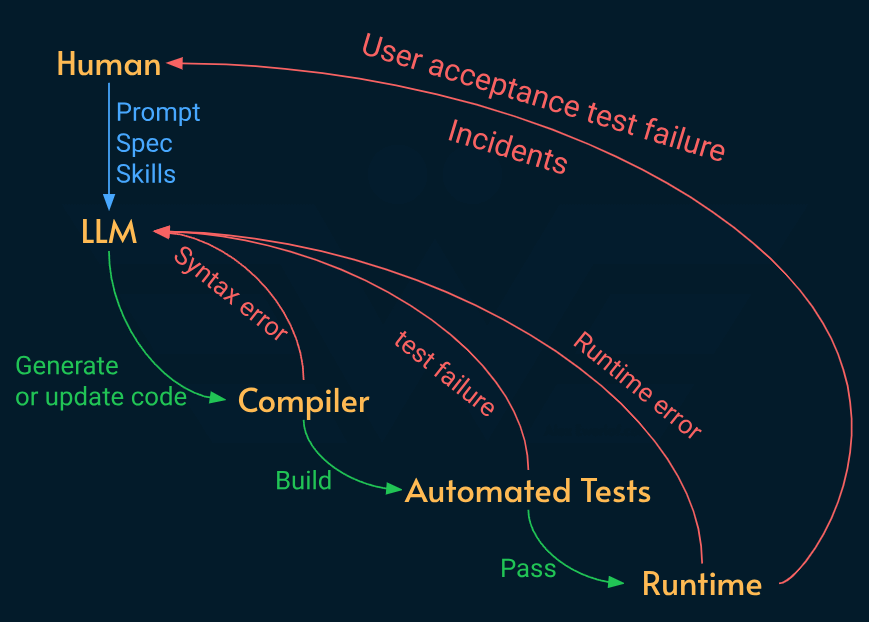
3️⃣ Consistent: humans are wrong too. But they’re wrong in a consistent way. Once they learn, they know. They progress. Current AI is trapped in its training data checkpoint. It can “learn” with SKILL, AGENT, memory and other helpers and it can even be fine tuned but it still suffers from the so called “jagged intelligence”, hence it has jagged reliability.
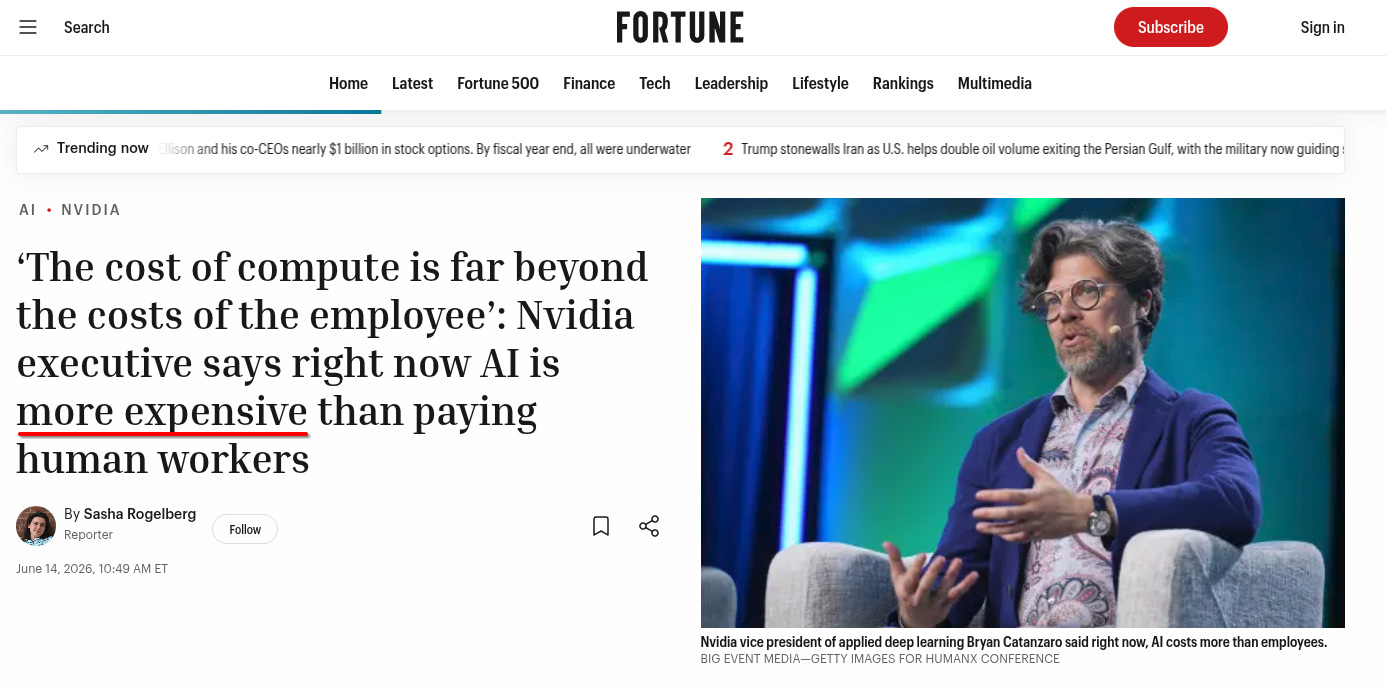
4️⃣ Cheaper: cost of generation is increasing but it’s still much less than an engineer. If you see engineers as machines that convert coffee to code, then they are doomed. But in reality, code is just a side-artifact of reaching clarity in a problem domain.
The actual value of engineers is to solve the right problem in a way that can evolve while taking accountability for when it breaks. I’m not convinced the TCO (total cost of ownership) for software has changed that much. If anything, the slop and FOMO has made it more expensive:
There’s more code to review. Approval fatigue takes a toll on job satisfaction.
There are more incidents due to increasing complexity and lagging understanding due to cognitive debt.
Every layoff is an exercise of throwing the baby out with the bathwater. The institutional knowledge that leaves the door will never come back.
Note: I deliberately stayed clear from “leadership” when talking about management because the latter is a position you’re hired for while the former is an position that you earn.
To Engineers: Managing up while staying relevant
First of all, the AI-motivated layoff season (regardless of the actual reason) revealed what a poor job we have done in elaborating what it is that we do. You cannot deny that a part of the management workforce cannot wait to get rid of us.
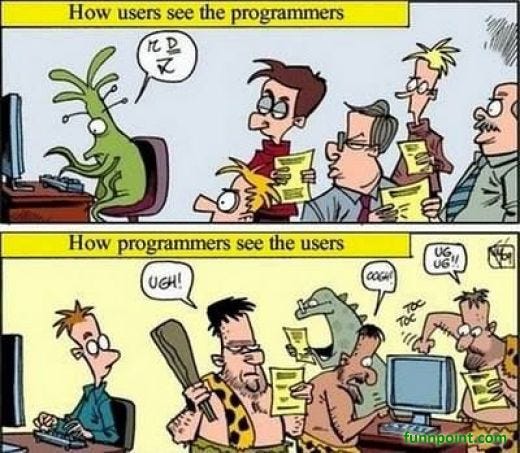
Why is that?
I think there are a couple of factors at play:
Good professionals (not just engineers), make their job look easy. They masterfully use the right tools to efficiently do the job effectively. An uninformed observer may think if they buy the tool and watch some YouTube tutorials they can beat the pros. And they may! But there are years of experience that lead to intuitions that are hard to verbalize to be fed to language models.
It’s much easier to deal with computers than human beings. Computers are fast, predictable, logical creatures. Humans are the opposite. Whether you fit into this category or not, our profession has disproportionately attracted neurodivergent folks who have superpowers with computers. The flipside is that we don’t do a decent job promoting ourselves and elaborating what we actually do. As a result, the mechanical part of the job that meets the eye (staring at the screen, punching the keyboard, and doing the dreaded standups) is what it has boiled down to! Superficially.
Done right, AI-driven layoffs should shrink the part of the workforce that is less likely to monetize tokens efficiently. Not engineers! 😄
You need to educate them on why AI didn’t 10x your performance. That’s on you.
From their perspective, they’ve done their part by buying Claude, Gemini, Whatever subscription. 💸 But YOU failed to deliver the overnight miracle promised by the token sellers.
They thought they can pay their way through the biggest change in our industry (and arguably history) by throwing tokens at you while keeping their fancy titles and fat checks.
They can’t!
The scale of this change is far beyond the leaf nodes of the org tree.
Right now, companies can get away with charging pre-AI rates for post-AI effort. But those days are counted.
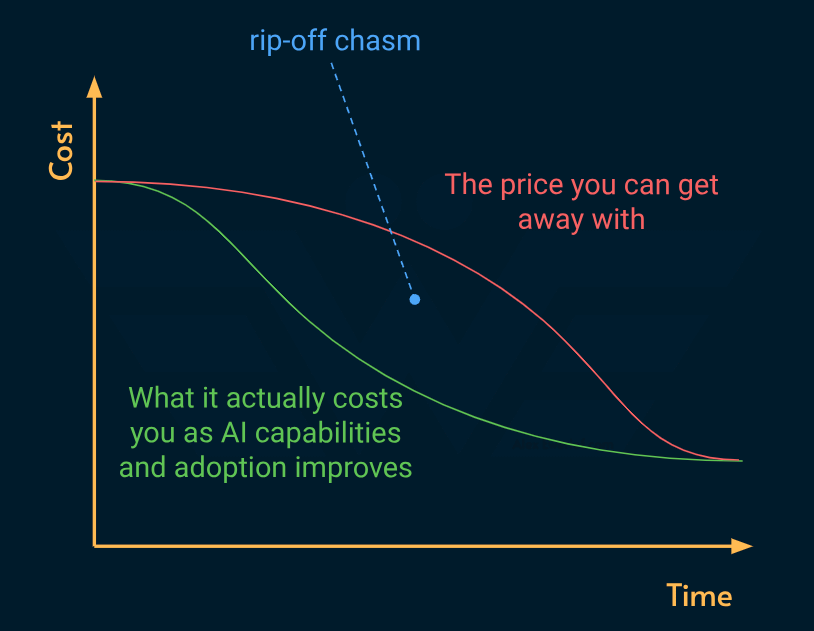
Some managers know that. They use AI too. Not like a power user who knows how the context, memory, and agent orchestration works. But they try. And they even succeed! I had a CTO create their entire SaaS offering with Claude over a weekend only to come to the following conclusion:
These guys are monkeys! If I can do that, why can’t they? I announce hiring freeze effective immediately! I do not fund bandwidth increase when AI is “underutilized”.

AI output is a bit like Nordic Gold. It’s cheap but technically advanced and damn too realistic. If you really don’t care about having the actual gold, that’s fine. Many use cases don’t need gold at all.
It just happens that most software that is worth paying for, needs that extra 20 in an 80/20 situation.
Right or wrong, AI has a deceptively low entry bar which makes people dilusional. They don’t see the complexity of shipping that vibe to prod. You do. And when you resist, you’re labeled laggard and techno-phobic!
While I sympathize, the ball is in your ground.
The AI Dunning-Kruger effect states:
The less you know about a topic, the more likely you are to trust AI output on that topic.
You cannot expect a manager who spends more time than you in meetings to have your depth. Cut them some slack. Show some empathy. Appreciate their effort both in prompting and buying tokens, but be firm on the risks you see.
You are the pro. You are on-call. They’re not.
Don’t sacrifice your long term relevance for the short term pleasure of your manager.
Stand your ground on quality and elaborate that turning the whole SDLC upside down takes time and has a learning curve. Elaborate that pumping company IP to AI vendors isn’t as safe as they think it is. DPA (data processing agreement), doesn’t mean they’re going to respect your data. Your data in context of doing actual productive work is worth much more than the money they make from selling tokens.
AI vendors have gulped in everything they could get their hands on (legally or otherwise) and have multiple law suits open.
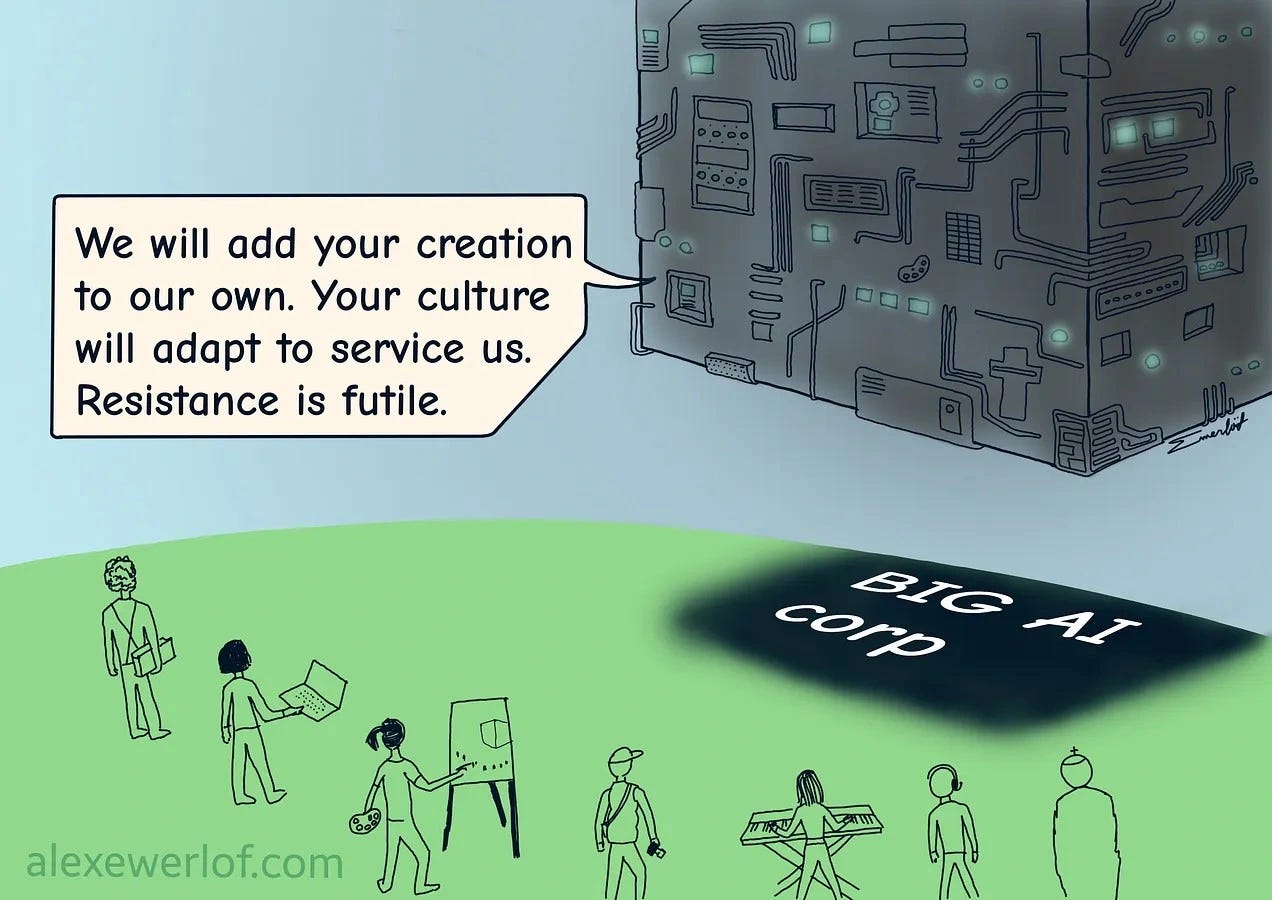
At the moment, there is no moat but if your “little” data and IP are the only thing standing between them and market supremacy, that’s a sacrifice they don’t shy away from.

Unless you have a larger legal team and deeper pocket than these AI vendors, be extremely careful.
Many problems in our industry stem from not knowing the difference between can and should:
Can you do it? Sure it’s feasible.
But should you do it? It depends on being ethical, sustainable, viable, etc.
You don't need me to tell you this (because you know too well): the more cognitive load you delegate to AI (to gain speed) the more dull and irrelevant you become over time.
Brain, as the main organ of knowledge work, isn't that different from muscles:
Use it or lose it.
Don't give in to pressure from short sighted managers. Short term business growth goals isn't necessarily aligned with long term personal growth and relevance.
I have worked in this industry for almost 3 decades and still haven’t met a single “laggard” engineer. I’m sure you’re using AI to the effect you see reasonable:
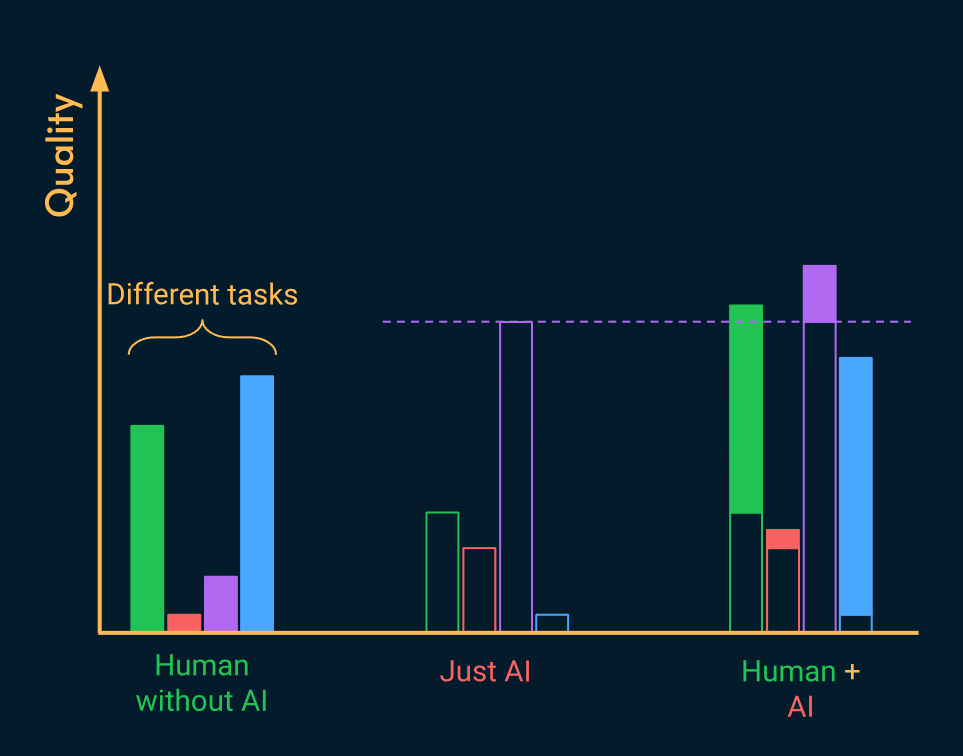
You know very well that the day the cost of keeping you surpasses your value, companies don't shy away from cutting the cord.
When the cow runs out of milk, it's butchered for meat! This is a point I've made with lots of diagrams:

My monetization strategy is to give away most content for free but these posts take anywhere from a few hours to a few days to draft, edit, research, illustrate, and publish. I pull these hours from my private time, vacation days and weekends. The simplest way to support this work is to like, subscribe and share it. If you really want to support me lifting our community, you can consider a paid subscription. If you want to save, you can get 20% off via this link. As a token of appreciation, subscribers get full access to the Pro-Tips sections and my online book Reliability Engineering Mindset. Your contribution also funds my open-source products like Service Level Calculator. You can also invite your friends to gain free access or save via a group subscription.
And to those of you who already support me, thank you for sponsoring this content for the others. 🙌 If you have questions or feedback, or you want me to dig deeper into something, please let me know in the comments.